
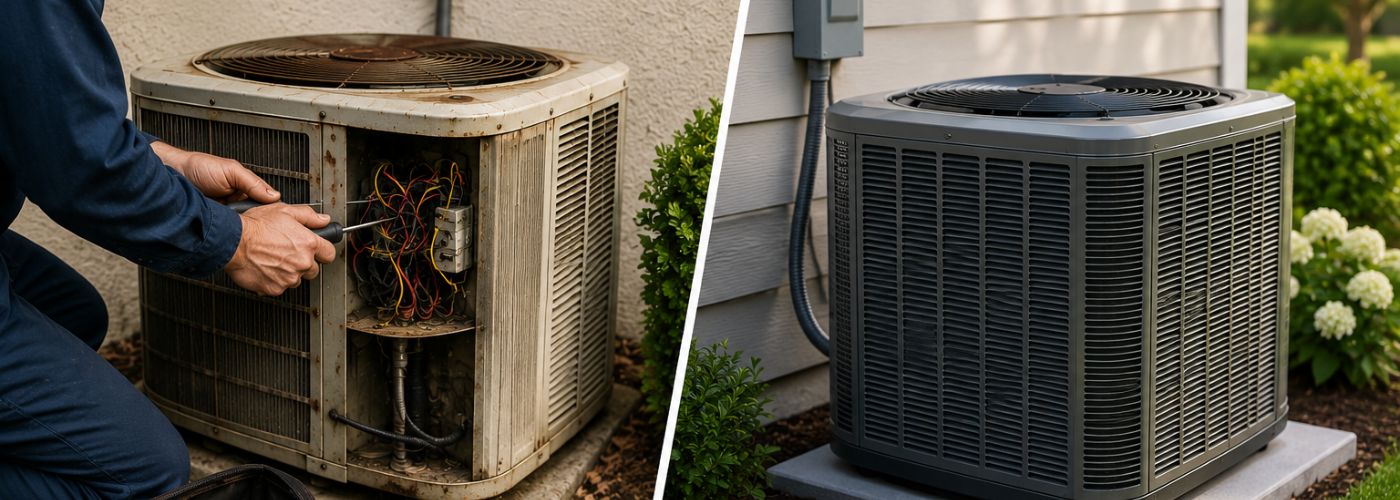
Your air conditioner plays an important role in keeping your home comfortable, especially during the hottest months of the year. Knowing whether to repair an existing unit or invest in a replacement can save money and reduce future problems.
This article goes over the factors to consider so you can make the right decision when deciding to repair vs replace your AC.
Understanding When To Repair vs Replace Your AC System
Many homeowners struggle with the decision to keep repairing an older cooling system or purchase a new one.
The answer depends on several factors, including the age of the equipment, repair costs, energy efficiency, and how well the system has performed over time.
Looking at the entire picture instead of focusing on one repair bill often leads to a better long-term decision.
Making the right choice now can help reduce future AC repair costs while improving comfort throughout your home. A professional inspection can reveal whether the issue is minor or a sign of larger mechanical problems.
Taking the time to compare repair expenses against replacement benefits allows homeowners to make a more confident investment instead of reacting to an unexpected breakdown.
Repair an AC Unit With Affordable Component Issues
Not every air conditioning problem means the entire system has reached the end of its life. Many common repairs involve replacing capacitors, contactors, thermostats, fan motors, or clogged drain lines.
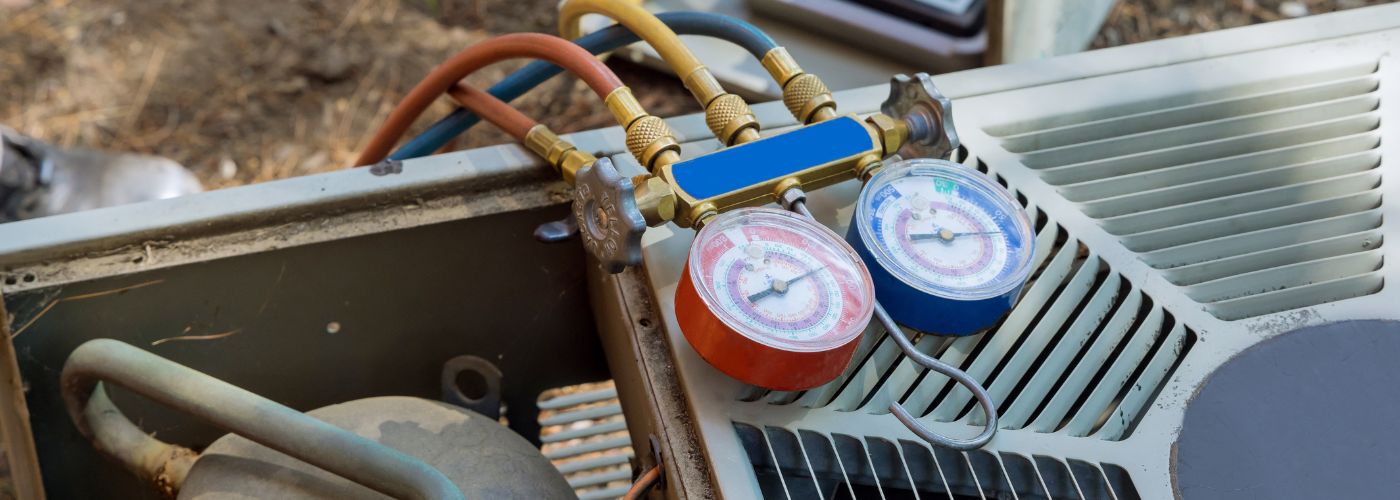
These components naturally wear over time and can usually be repaired without replacing the entire unit. If the rest of the system remains in good condition, these repairs often restore reliable performance.
Homeowners should also consider how the unit has operated before the repair became necessary. A single affordable repair on a well-maintained system is often the most practical solution.
If the equipment still cools efficiently, maintains comfortable indoor temperatures, and has a solid maintenance history, repairing individual parts may extend the life of the system for several more years.
Replace an Aging System With Frequent Problems
Older air conditioning systems naturally become less reliable as internal parts wear down. Even after one repair is completed, another issue may appear shortly afterward because other components have experienced years of use.
This cycle can become expensive and frustrating for homeowners who find themselves scheduling repeated service visits every cooling season.
Constant repairs usually indicate that the overall system is wearing out rather than suffering from isolated failures.
Most residential air conditioners have an expected lifespan of around 10 to 15 years with proper maintenance.
Once equipment reaches that age and repair costs continue to increase, replacing the unit often becomes the smarter financial decision while providing improved reliability and energy savings.
Repair Equipment That Still Delivers Efficient Performance
An air conditioner that continues cooling efficiently may deserve repairs rather than immediate replacement.
If utility bills have remained consistent, airflow is strong, and indoor temperatures stay comfortable, the equipment is likely still operating effectively.
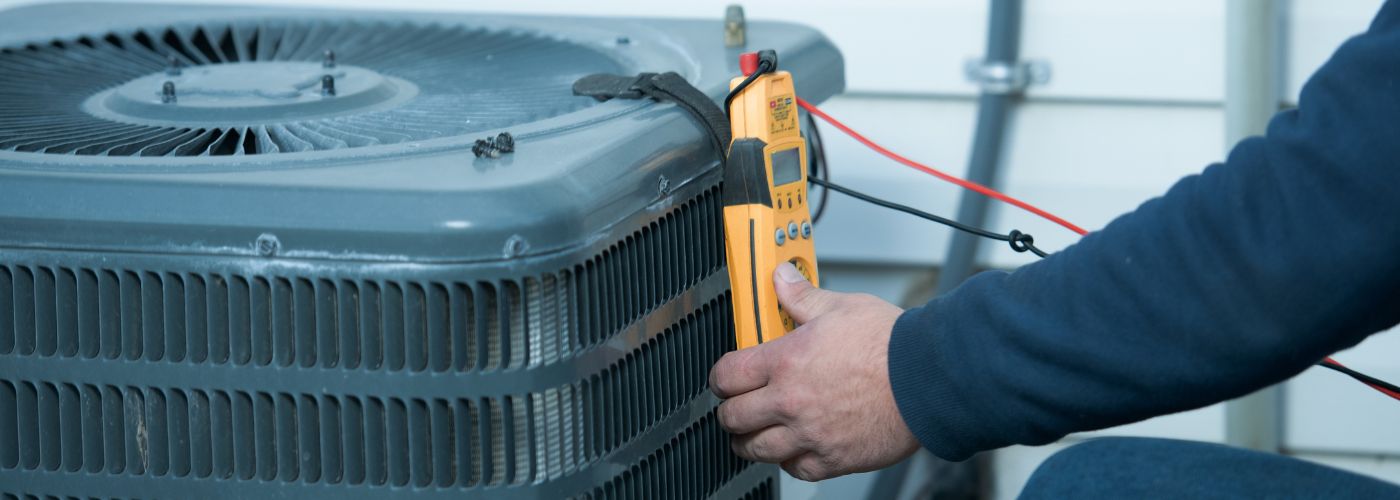
Minor repairs can help restore full performance without requiring the expense of installing an entirely new system.
Maintenance history also plays an important role when evaluating existing equipment.
Well-maintained systems frequently provide dependable service long after small repairs are completed.
Annual inspections, clean coils, proper refrigerant levels, and regular filter changes all contribute to extending the life of an air conditioning system while keeping operating costs under control.
When to Opt For Full AC Replacement
There are situations where replacing the entire system becomes the better option despite the higher upfront investment.
Major compressor failures, leaking evaporator coils, outdated refrigerants, and multiple failing components can make repairs increasingly expensive.
In these situations, replacement often provides better value over the long term while reducing future repair concerns.
Modern air conditioning systems also offer higher efficiency ratings, quieter operation, and improved indoor comfort compared to older models.
Upgrading to newer technology often lowers monthly energy bills while providing more consistent cooling throughout the home.
Homeowners may also benefit from manufacturer warranties that offer additional protection against future repair expenses.
Evaluating Major Breakdowns Against the Cost of a New Installation
When facing a significant repair estimate, comparing that cost with the price of a new installation is an important step.
A repair that approaches a large percentage of the replacement cost may not be the best investment, especially if the system is already older.
Looking beyond the immediate expense helps homeowners understand the long-term financial impact of both options.
Choosing the most cost-effective solution means considering reliability, efficiency, warranty coverage, and expected future repairs instead of focusing only on today’s invoice.
Working with an experienced HVAC professional can provide a complete evaluation of your system’s condition, allowing you to make an informed decision that delivers dependable comfort for many years to come.
Frequently Asked Questions (FAQ)
If your air conditioner only needs a minor repair and has been operating reliably, repairing it is often the best choice. However, if the system is older, requires frequent repairs, or the repair cost is significant, replacing it may provide better long-term value.
Most residential air conditioning systems last between 10 and 15 years with proper maintenance. Regular inspections, filter replacements, and routine servicing can help extend the lifespan while maintaining energy efficiency.
Replacing components such as capacitors, contactors, thermostats, fan motors, or clearing clogged drain lines are generally affordable repairs. If the rest of the system is in good condition, these repairs can restore reliable performance without requiring a full replacement.
Replacement is often recommended when the system experiences major component failures, frequent breakdowns, uses outdated refrigerant, or has reached the end of its expected lifespan. A new system can improve reliability, comfort, and overall energy efficiency.
In many cases, yes. Modern air conditioning systems are designed to operate much more efficiently than older units, which can reduce monthly energy costs while providing more consistent cooling, quieter operation, and improved indoor comfort.