

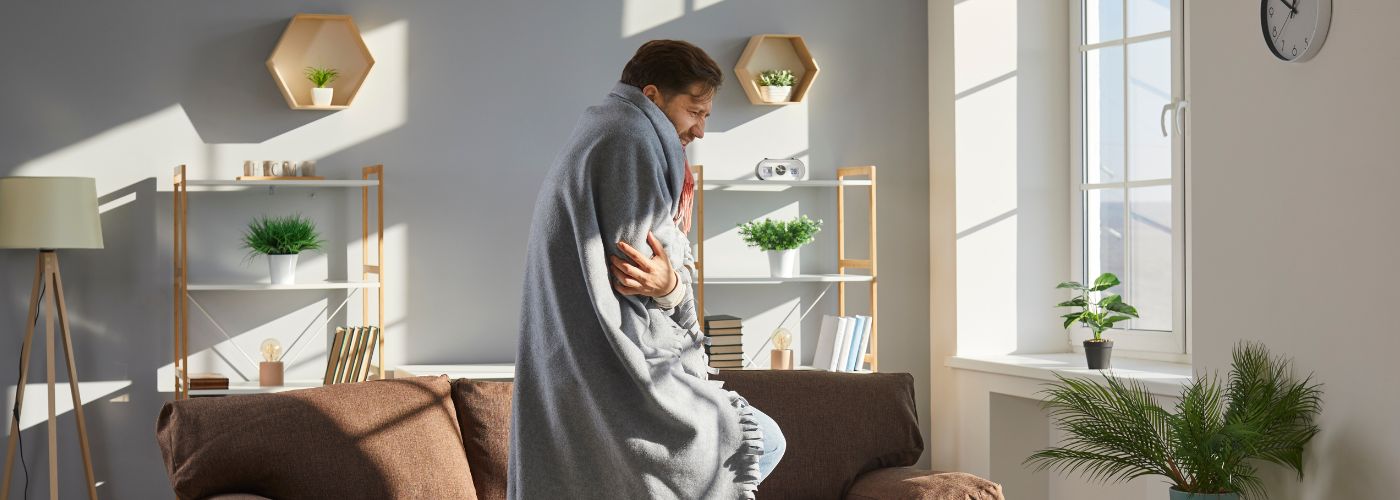
Uneven temperatures can make certain rooms uncomfortable even when the thermostat is set correctly. One area may stay warm while another feels noticeably cooler, making consistent indoor comfort difficult to maintain.
This article covers several common problems that can create uneven temperatures throughout a home.
Major Causes of Hot And Cold Spots
Uneven indoor temperatures can develop for many reasons, and the HVAC equipment itself is not always responsible.
Insulation, ductwork, airflow, home design, and HVAC capacity can all influence how effectively conditioned air reaches each room.
In many homes, an airflow imbalance causes hot and cold spots when certain rooms receive more conditioned air than others.
A room that does not receive enough heated or cooled air may remain noticeably different from the temperature set on the thermostat.
Temperature differences can become more noticeable during extremely hot or cold weather. Rooms exposed to strong afternoon sunlight may need additional cooling, while shaded areas may remain comfortable with less conditioned air.
Finding the source behind uneven temperatures can help homeowners correct the actual issue rather than continually changing the thermostat.
Looking at the entire home as a connected system can make it easier to determine why certain areas are harder to keep comfortable.
Inadequate Attic Insulation and Heat Loss
The attic plays an important role in regulating indoor temperatures because it separates living spaces from extreme temperatures near the roof.
During summer, attic spaces can become extremely hot as roofing materials absorb heat from direct sunlight.

During colder months, indoor heat can escape upward when attic insulation is thin, damaged, uneven, or missing. Inadequate attic insulation causes hot and cold spots by allowing certain rooms to gain or lose heat more quickly than surrounding areas.
Proper attic insulation slows unwanted heat transfer and helps the HVAC system maintain steadier temperatures throughout the living space.
Insulation problems may be especially noticeable in upstairs bedrooms, converted attic spaces, and rooms located directly beneath large roof sections.
Gaps near attic access points, plumbing lines, wiring openings, and other penetrations can also allow unwanted air movement.
These small openings may contribute to temperature differences even when much of the attic has adequate insulation.
Adding more insulation may help, but existing materials should be evaluated before changes are made. Insulation that has settled, shifted, gotten wet, or been disturbed may no longer perform as intended.
Air sealing attic openings can provide additional protection because insulation alone may not stop uncontrolled air movement.
Incorrect HVAC System Sizing
Heating and cooling equipment needs to match the size and characteristics of the home. A system that is too small may operate for long periods without providing enough heating or cooling to rooms located farther away from the equipment.
This can leave certain areas uncomfortable when outdoor temperatures become extreme. An undersized system may also have difficulty keeping up as heating or cooling demands increase, particularly in rooms with greater sun exposure or heat loss.
Oversized equipment creates a different concern. A system with too much capacity may quickly change the temperature near the thermostat and shut down before conditioned air circulates throughout the entire home.
Incorrect HVAC sizing causes hot and cold spots when system cycles do not provide consistent comfort across every room.
Bigger HVAC equipment does not automatically mean better indoor comfort because the system must be properly matched to the home’s actual heating and cooling requirements.
Proper HVAC sizing involves more than total square footage. Ceiling height, insulation, window placement, sun exposure, air leakage, occupancy, and local weather can all influence heating and cooling demands.
A professional load calculation can help determine the appropriate system capacity for a particular home.
Poorly Sealed Ductwork Reducing Airflow
Ductwork carries heated and cooled air from HVAC equipment into individual rooms. Loose connections, cracks, gaps, and damaged sections can allow conditioned air to escape before it reaches the intended supply vent.
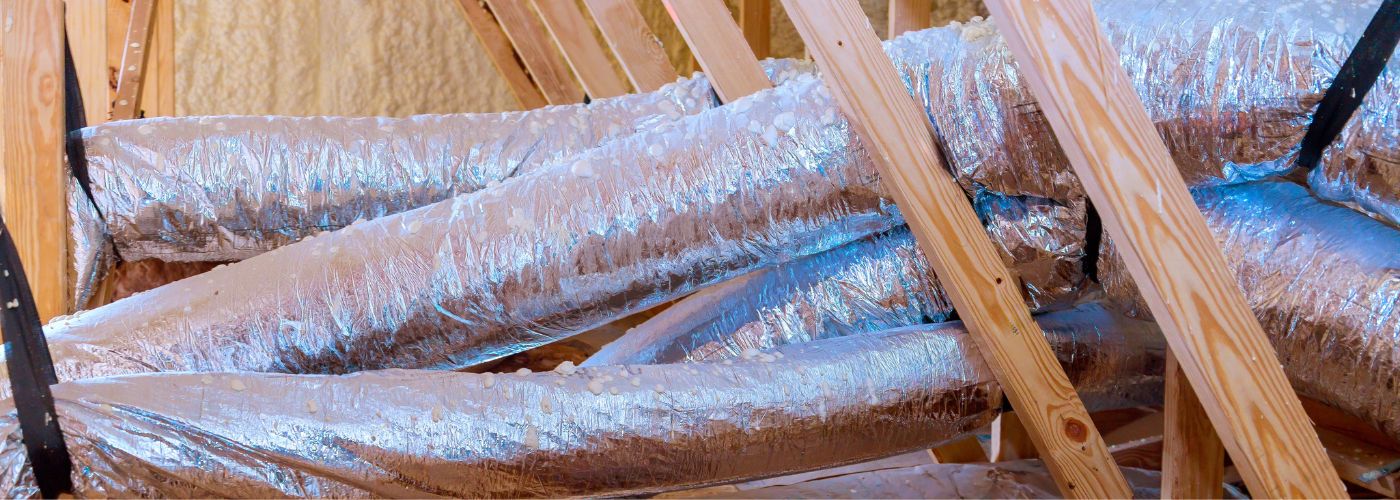
Air leaks can be particularly wasteful when ducts travel through attics, crawl spaces, garages, or other unconditioned areas. Escaping air reduces the amount available for the rooms that the duct system is supposed to serve.
Poorly sealed ductwork causes hot and cold spots when leaks prevent certain areas from receiving adequate heated or cooled air.
For example, a bedroom at the end of a long duct run may receive considerably less airflow than a room positioned closer to the HVAC equipment.
Even when heating and cooling equipment operates correctly, damaged or leaking ducts can prevent conditioned air from reaching rooms evenly.
Duct issues are not limited to visible holes or cracks. Loose connections, crushed flexible ducts, sharp bends, disconnected sections, and poorly designed duct runs can also restrict airflow.
Sealing accessible leaks and repairing damaged sections may improve air delivery, while more serious problems may require an evaluation of the overall duct layout.
Closed or Obstructed Air Vents
Supply vents need enough open space around them to distribute conditioned air throughout a room.
Furniture, rugs, curtains, storage boxes, and other household items can partially or completely block airflow without homeowners immediately noticing the problem.
Dust and debris around a vent or register can also interfere with normal airflow. Keeping supply and return vents open and unobstructed allows air to circulate more effectively throughout the home.
Closing vents in unused rooms may seem like a simple way to send more conditioned air elsewhere, but residential duct systems are designed to operate with a specific airflow balance.
Closing multiple registers can increase duct pressure and interfere with air delivery to other parts of the house.
A closed or obstructed vent causes hot and cold spots when a room cannot receive the airflow needed to reach a comfortable temperature.
The problem may become especially noticeable in larger rooms or spaces located farther from the HVAC system.
Return vents are equally important because they allow indoor air to travel back to the HVAC equipment for another heating or cooling cycle.
A blocked return can interfere with circulation throughout a section of the home. Checking both supply and return vents is a practical starting point when one room suddenly feels warmer or cooler than nearby areas.
Multi-Story Homes and Natural Heat Movement
Temperature differences are often more noticeable in homes with two or more floors. Warm air naturally rises while cooler, denser air tends to settle lower, which can make maintaining the same temperature on every level more challenging.
During summer, upper floors may become warmer as heat travels upward and additional warmth enters through the roof. During winter, lower levels may feel cooler while heated air moves toward upper floors.
In multi-story homes, natural heat movement causes hot and cold spots when a single HVAC system struggles to maintain the same temperature across different levels.
This issue may be more noticeable when one thermostat controls heating and cooling for the entire house.
The thermostat can reach its set temperature while another floor remains too warm or too cool. Open stairways, high ceilings, large windows, and varying sun exposure can make these temperature differences even more noticeable.
Multi-story homes may require more precise airflow balancing because each floor can experience different heating and cooling demands throughout the day.
Adjusting airflow, improving insulation, installing properly designed zoning, or changing thermostat placement may help create more consistent temperatures.
The best approach depends on the home’s layout and whether the temperature imbalance comes from natural heat movement, HVAC distribution, or several issues working together.
Frequently Asked Questions (FAQ)
Hot and cold spots can be caused by inadequate insulation, leaking ductwork, blocked vents, incorrect HVAC system sizing, or natural heat movement between floors. The exact cause depends on how well conditioned air is being distributed and how quickly individual rooms gain or lose heat.
Yes. Thin, damaged, or missing attic insulation can allow heat to transfer more easily between the attic and living areas. Rooms located beneath poorly insulated sections of the attic may become noticeably warmer during summer or colder during winter.
Yes. Gaps, loose connections, crushed ducts, or damaged ductwork can reduce the amount of conditioned air reaching certain rooms. Areas located at the end of longer duct runs may be especially affected when air escapes before reaching the intended vents.
It can. An oversized HVAC system may heat or cool the area around the thermostat too quickly and shut off before conditioned air circulates throughout the entire home. Proper system sizing helps provide longer, more balanced heating and cooling cycles.
Upper floors often feel warmer because warm air naturally rises and rooms near the roof can experience additional heat gain. Insulation, sun exposure, airflow, thermostat placement, and HVAC design can make these temperature differences even more noticeable in multi-story homes.